
Design for people: why presence matters more in an increasingly optimized world.
Insights
September 12, 2026
·
Meg Delagrange
|
Sr. Art Director
Human vs. AI. That's the only argument anyone seems to want to have right now.
Some of the people I follow use AI to edit their content. Some refuse to touch it at all. Others let it do everything for them and automate their posting schedule. And somewhere in scrolling through all of the noise, I’ve noticed that I stop engaging the second something feels like AI. It’s like knocking on the door of a beautiful home and all the lights are on but I’m not getting an answer. No one’s home. Creepy.
And then there’s the Jeep ad that premiered at Cannes this year, the one where a discarded, lone tire chases a truck through the woods, floats down a river, and nearly gets flattened on a busy highway, just trying to find its way home. It’s fully AI-generated and that’s obvious from the get-go. But I watched the whole thing anyway. I hate to admit it but by the end my throat felt tight and my eyes were a little teary. An ad “nobody made” actually made me feel something real.
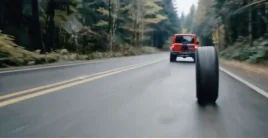
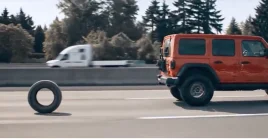
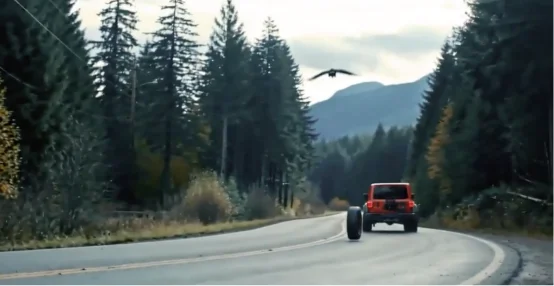
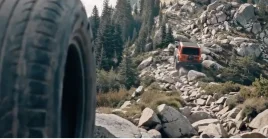
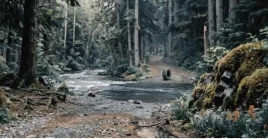
Source: Jeep, AI-generated “Chasing the Wild” campaign, Instagram, 2026.
So maybe the real tension we’re all wrestling with isn’t human vs. AI. It’s why do we even care who made it, once it’s already made us feel something?
Maybe what we’re actually reacting to is presence — whether something feels like anyone’s at home. AI can apparently fake that, occasionally, astonishingly well. Humans fail at it constantly: every over-optimized funnel, every LinkedIn post so polished it reads like it ran through a formula, because usually it did.
What people are actually asking for is evidence of humanity. Technology just happens to be an easy thing to blame when it’s not there.
Every week at Converge, our all-hands opens with something we call a “heads-up moment.” Someone shares a story of something they experienced out in the real world that shifted how they’re thinking or showing up at work. Maybe it sounds like an insignificant ritual for a performance marketing agency to build into its week, but I’ve come to think it’s one of the most useful things we do.
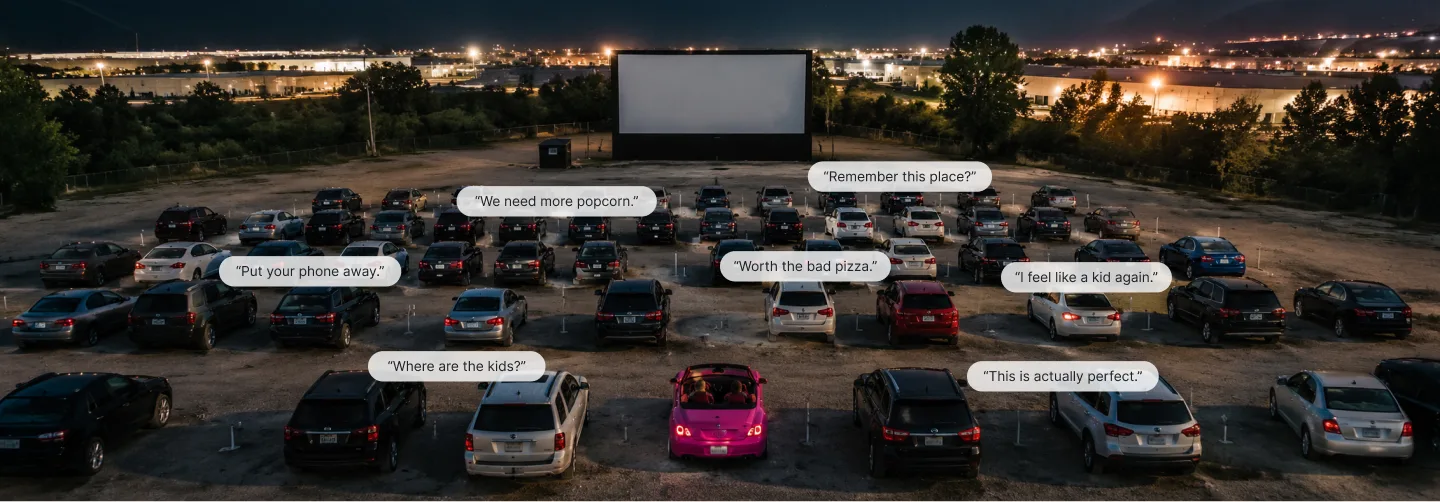
Mine, this quarter, happened on a sticky 90° evening. My husband and I packed our 8-passenger minivan full with our kids and their friends to experience the last remaining drive-in movie theater in Denver.
We sat in a line of cars for nearly an hour waiting to get into a simple gravel parking area, surrounded by commercial buildings on the outskirts of the city. The place looked like it hadn’t been updated in over 50 years.
The viewing experience wasn’t great because the screen was competing with light pollution from the surrounding area. The pizza looked and tasted like cardboard (I’m not sure it was actually “food”). A dust storm rolled through halfway into the movie. By almost every objective measure, it wasn't a particularly great experience.
And yet... The place was packed. Families sat in trunks and lawn chairs. Kids begged parents for outdated ice cream in squeeze pouches and chased each other between cars. Teenagers laughed with friends and stole each other’s candy.
Nobody was bothered by the imperfections, more like infatuated with them.
On the drive home, my stepdaughter's friend leaned forward and said, “I promise you the pizza used to be fire.”
I smiled. “How old were you the last time you went?”
She thought for a second. “Maybe eight?” Ah. The pizza probably hadn't changed. She had.
That moment stuck with me because it reminded me of something we talk about at Converge: People don’t remember products. They remember experiences.
Understanding humans tells us the why.
As a Creative team, we spend most of our time thinking about how something works — the flow, the friction, the conversion path. The thing people carry with them afterward has almost nothing to do with the interface or campaign itself but the feeling that lingers once they put down their phone. We’re looking beyond the work to understand the people the work is for.
Does human-led design mean avoiding AI? Not for us. It means understanding the one thing AI still can’t: why something matters.
Recently we reviewed campaign performance where storytelling dramatically outperformed on one channel while factual messaging generated stronger engagement somewhere else. Neither approach was wrong, people simply came to the channels with different needs. The numbers told us what happened. Understanding the people told us the why — what this number was actually a symptom of, what a user was feeling in the three seconds before they bounced. Somewhere in there is the real turn-off: not the technology itself, but the feeling of being optimized by it.


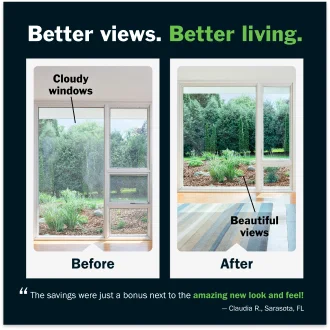
Creative: Converge, home services client campaign, Summer 2025.
AI will keep getting faster. Design tools will keep getting smarter. Production will keep getting cheaper. Good. Let it. None of that touches what's actually becoming valuable: us being human. Us using judgment. Us having taste. Us having empathy. Us using our curiosity. Us telling stories. Us living this one wild and precious human experience.
Turns out I wasn’t the only one having this heads-up moment. A teammate had one about research showing that audiences are increasingly rejecting overly polished aesthetics in favor of work that feels handcrafted and imperfect.
Another teammate pointed out something I haven't stopped thinking about since: people don’t want to abandon modern life. They’re just frustrated with its lack of meaning. The answer isn’t abandoning everything we know, it’s systemic change that refocuses on the core values we forgot make life worth living: traditions, generational knowledge, stability, family, hard work, finding identity within a community.
Different stories. Same conclusion.
The experience people remember is rarely the smoothest one. It’s the most human one.
Nobody really remembers the pizza. They remember who they were with. They remember how they felt.
Design for that.